
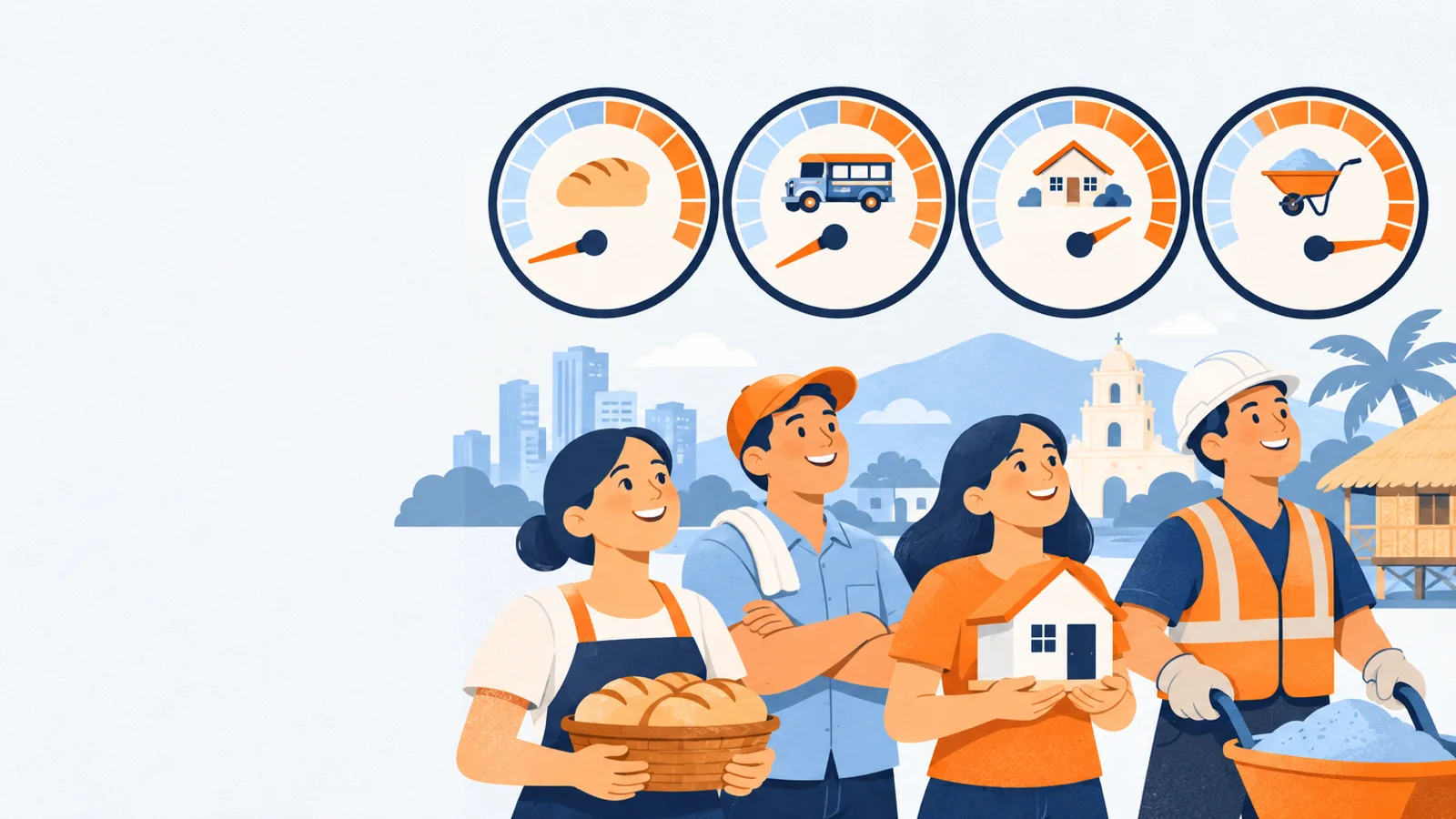
Types of inflation by cause
| Type | What happens | Philippine example |
|---|---|---|
| Demand-pull | Spending grows faster than the economy can supply goods. | Holiday spending around 13th month pay; strong remittance inflows. |
| Cost-push | Higher costs of fuel, food, wages or imports are passed on in prices. | Transport up 20.1% and rice up 20.7% in October 2026. |
| Built-in (wage-price) | People expect prices to rise, so they ask for higher wages and firms raise prices, which keeps inflation going. | Wage and fare adjustments that follow earlier price increases. |
| Imported | A weaker peso or dearer world prices raise the cost of imported goods. | Fuel and other imports when the peso weakens against the dollar. |
| Structural (supply-side) | Supply problems the central bank cannot fix with interest rates: crops, typhoons, oil, tax changes. | The BSP lists farm prices, natural calamities, oil prices and tax changes as factors beyond its control. |
Types of inflation by speed
The pace bands other than hyperinflation are teaching labels, not official thresholds. The BSP's own benchmark is the 2% to 4% target.
| Type | Rough pace | Philippine example |
|---|---|---|
| Creeping (mild) | Below about 3% a year | 2015 (0.7%) and 2025 (1.7%). |
| Walking | About 3% to 10% a year | 2022 (5.8%), 2023 (6.0%) and 7.8% in October 2026. |
| Galloping | Double digits a year | 1984 (49.8%) and 1991 (19.4%). |
| Hyperinflation | 50% or more a month | Has not happened in the Philippines on PSA's records; Zimbabwe (2008) and Venezuela (2018) are examples. |
Ways of measuring inflation
- Headline inflation: the whole consumer basket. 7.8% in October 2026.
- Core inflation: without volatile food and energy items. 5.4% in October 2026.
- Disinflation: inflation slowing but still above zero. Deflation: prices falling.
Next step: Read the two main causes in detail: cost-push and demand-pull inflation.
Questions
What are the main types of inflation?
Demand-pull, cost-push and built-in inflation, grouped by cause. By speed: creeping, walking, galloping and hyperinflation.
What is the difference between demand-pull and cost-push inflation?
Demand-pull comes from buyers spending more than the economy can supply; cost-push comes from sellers facing higher costs. The IMF describes both in its Back to Basics series.
What type of inflation does the Philippines have now?
Mainly higher costs in October 2026: transport prices rose 20.1% and rice 20.7% from a year earlier. Core inflation of 5.4%, above the 2% to 4% target, shows the increases are also spreading to other prices.
Sources
Figures are PSA's, published under a CC BY 4.0 licence, and update when PSA releases a new month. This page explains official data; it is not financial advice.