
A peso example
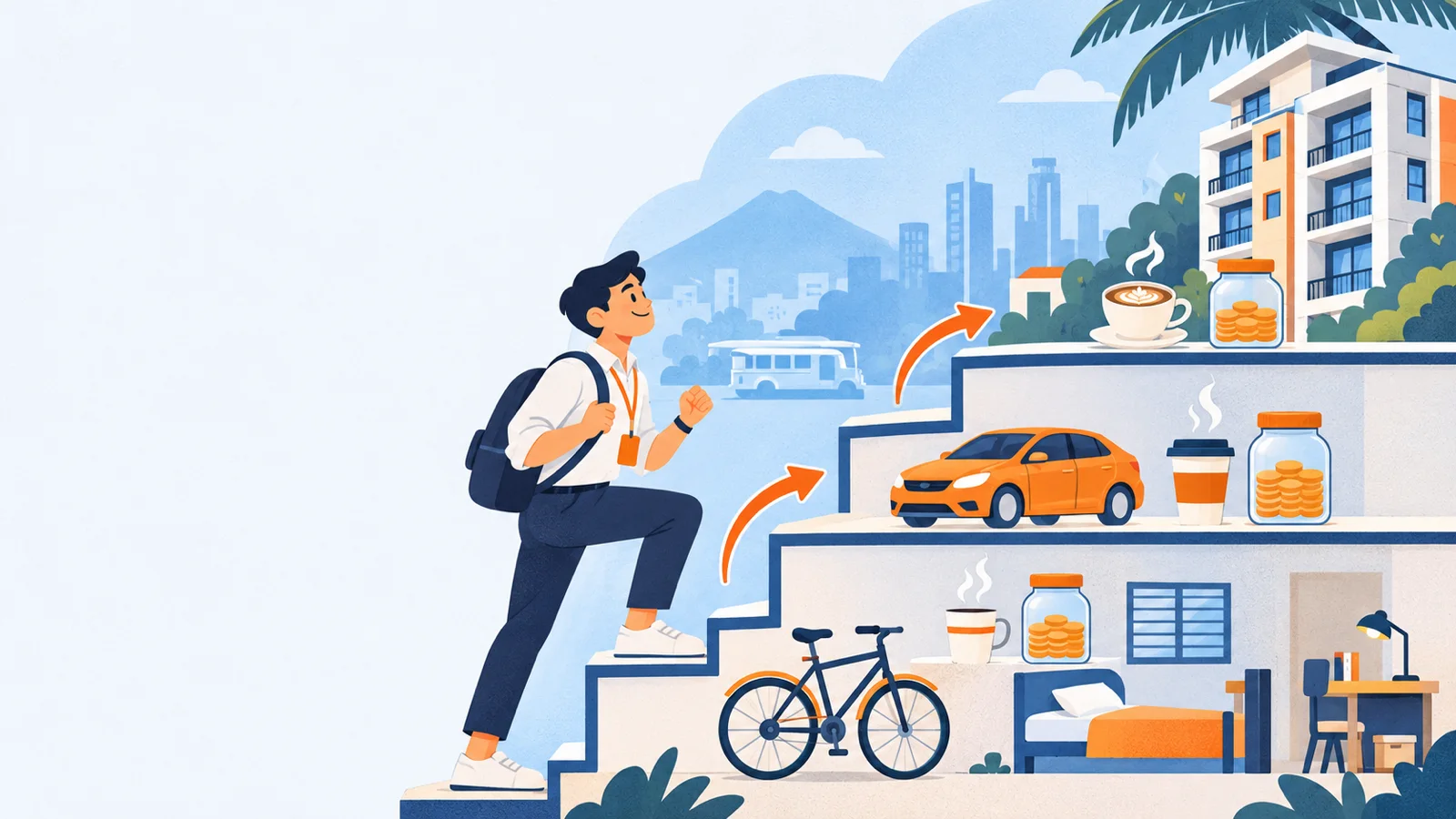
Ana earns ₱30,000 a month and saves ₱3,000. She gets a ₱5,000 raise. If she moves to a pricier condo, eats out more and upgrades her phone plan, her spending can rise by the whole ₱5,000 and her savings stay at ₱3,000. If she banks half the raise instead, she saves ₱5,500 a month, ₱30,000 more a year.
Price inflation makes this harder: at 7.8%, her old ₱27,000 of spending already costs about ₱29,106 for the same things, so part of any raise is needed just to keep up.
How to avoid lifestyle inflation
- Decide what share of each raise you will save before it arrives, for example half.
- Save bonuses and 13th month pay first, then spend what is left.
- Set up an automatic transfer to a separate savings account on payday.
- Upgrade one thing at a time and check your budget after each change.
- Keep an emergency fund of three to six months of expenses before taking on new fixed costs.
Lifestyle inflation vs price inflation
| Lifestyle inflation | Price inflation | |
|---|---|---|
| What rises | Your own spending | Average prices in the economy |
| Measured by | Your budget | PSA's consumer price index |
| Who controls it | You | Markets, supply, BSP policy |
| Current figure | Depends on you | 7.8% (October 2026) |
Next step: Work out how much a raise really adds after price increases with the inflation calculator.
Questions
What is lifestyle inflation?
Spending more every time you earn more, so savings do not grow.
Is lifestyle inflation bad?
Some upgrades are fine. It becomes a problem when it leaves no room for savings, emergencies or debt payments.
How do I stop lifestyle inflation?
Decide in advance to save a fixed share of every raise and bonus, and automate it.
Sources
Figures are PSA's, published under a CC BY 4.0 licence, and update when PSA releases a new month. This page explains official data; it is not financial advice.